Dry Creek Bed, Regrading, and Fresh Lawn Fix a Runoff Problem
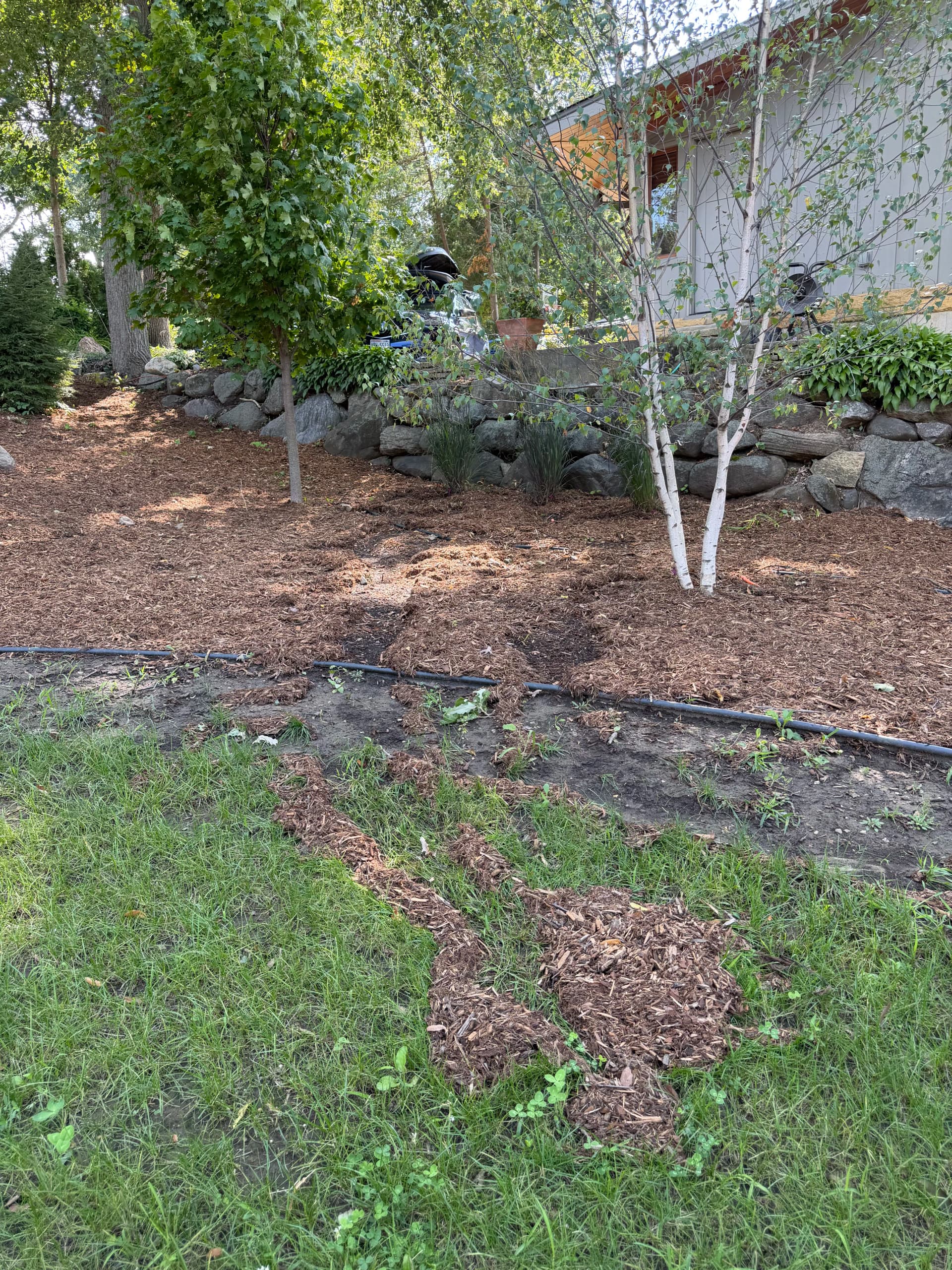
Runoff problems are one of those things that sneak up on you. Water pools in spots it shouldn't, mulch washes out, and over time you end up with soggy patches, erosion, and a yard that feels like it's working against you. That's exactly what we were dealing with here - a low area with no real direction for water to go.
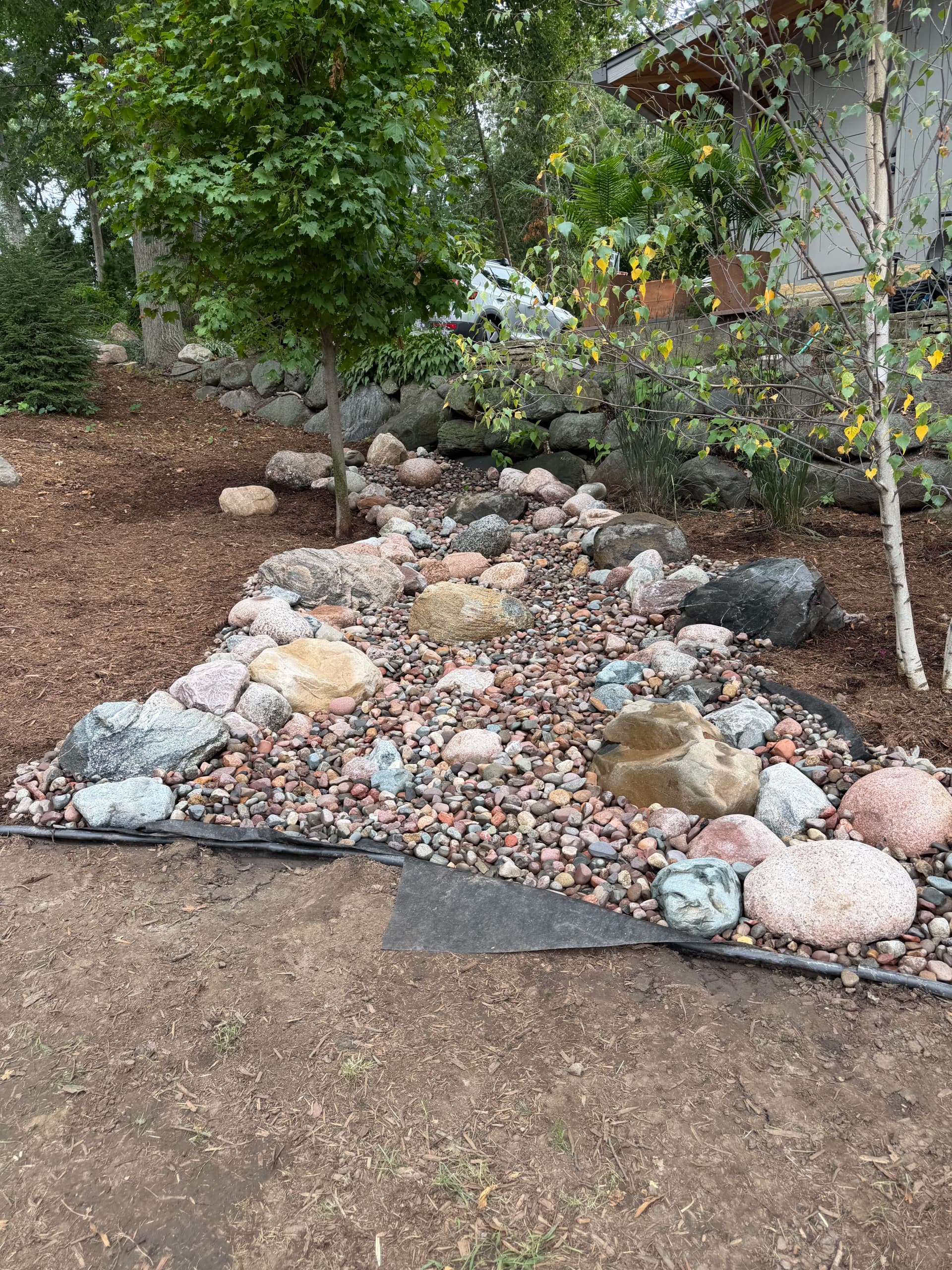
The fix started with regrading the ground to give water a path to follow. Grading is the unglamorous part of this kind of work, but it's the most important step. If the ground isn't shaped right underneath everything, nothing else holds up. Once the grade was established, we built out a dry creek bed using a layered approach - landscape fabric base, river rock fill, and natural boulders set along the edges to anchor it in place and give it a look that belongs in the landscape rather than on top of it.
A dry creek bed does two things at once. It moves water away from the areas where it causes damage, and it does it in a way that looks intentional. The mix of rounded river stones and larger accent boulders gives the channel a natural feel - like it could have always been there. That's the goal with this kind of drainage design.
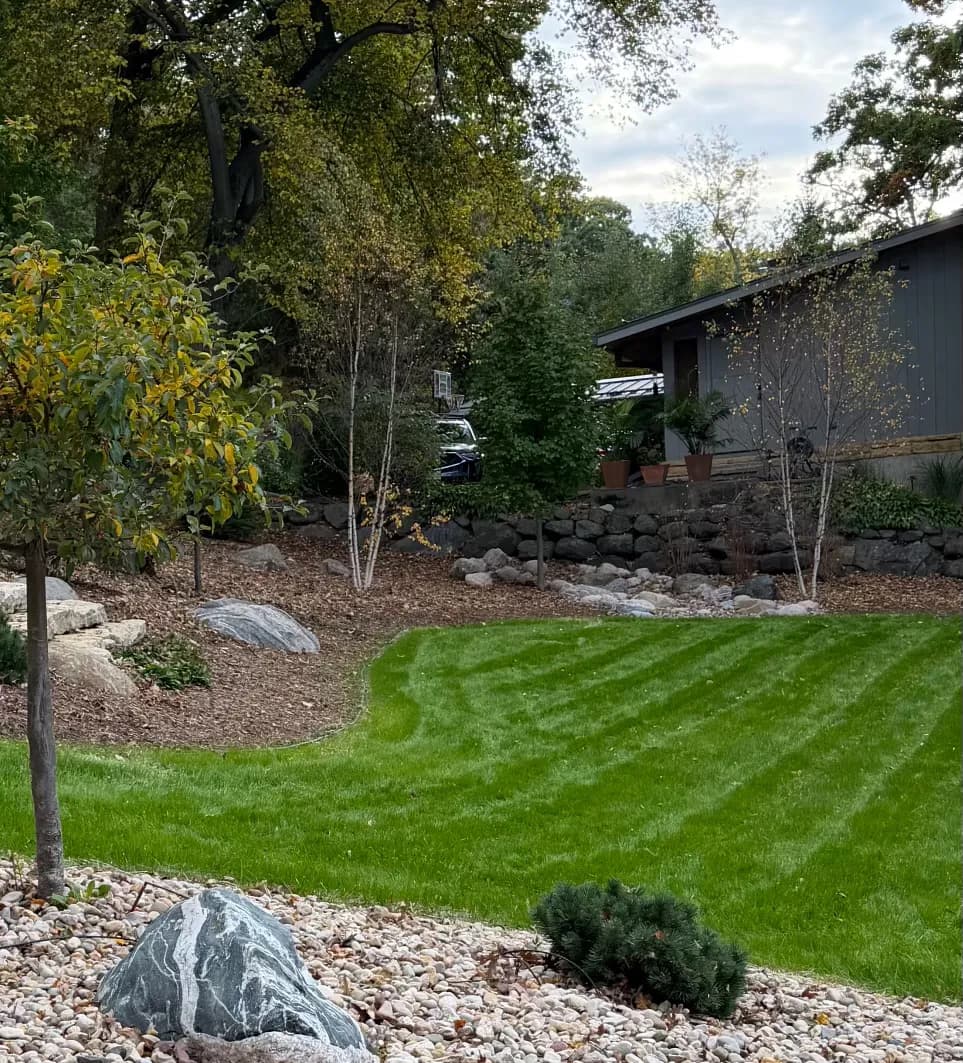
After the creek bed was in, we finished the surrounding area with fresh lawn seeding. Bare dirt left after grading work needs to be addressed quickly, and seeding it in right away is the cleanest way to tie everything together. The end result is a yard that handles rain properly, looks sharp, and won't have you out there dealing with the same soggy mess every spring.